So how do you go about teaching them something new? By mixing what they know with what they don’t know. Then, when they see vaguely in their fog something they recognize, they think, ‘Ah, I know that.’ And then it’s just one more step to, ‘Ah, I know the whole thing.’ And their mind thrusts forward into the unknown and they begin to recognize what they didn’t know before and they increase their powers of understanding. ― Françoise Gilot, Life with Picasso
Applied mathematics is the art of constructing mathematical models of phenomena in nature, engineering and society. In constructing models it is impossible to take into account all the factors which influence the phenomenon; therefore some of the factors should be neglected, and only those factors which are of crucial importance should be left. So we say that every model is based on a certain idealization of the phenomenon. In constructing the idealizations the phenomena under study should be considered at ‘intermediate’ times and distances (think of the impressionists!). These distances and times should be sufficiently large for details and features which are of secondary importance to the phenomenon to disappear. At the same time they should be sufficiently small to reveal features of the phenomena which are of basic value. We say therefore that every mathematical model is based on ‘intermediate asymptotics’. — Grigory Isaakovich Barenblatt
At any time there is only a thin layer separating what is trivial from what is impossibly difficult. It is in that layer that discoveries are made… — Andrei N. Kolmogorov
nāstyacauraḥ kavijanaḥ. There is no poet who is not a thief. — Rajashekhara
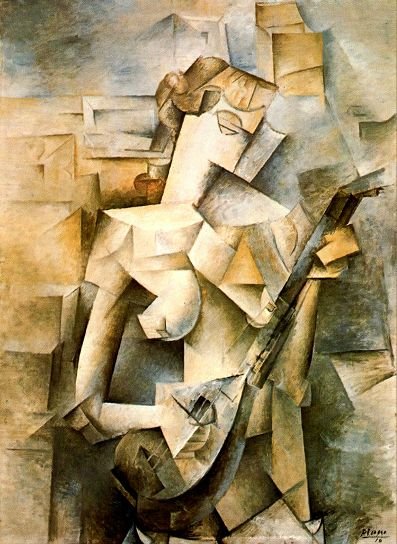
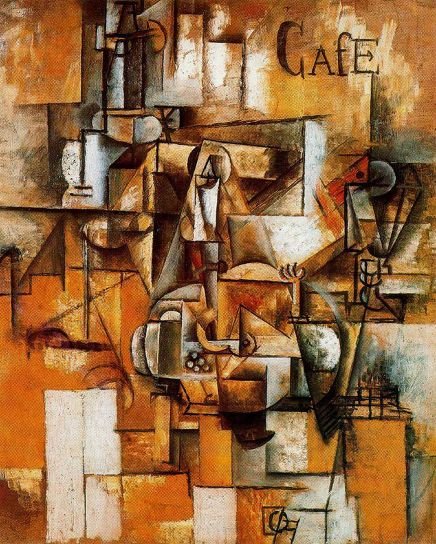
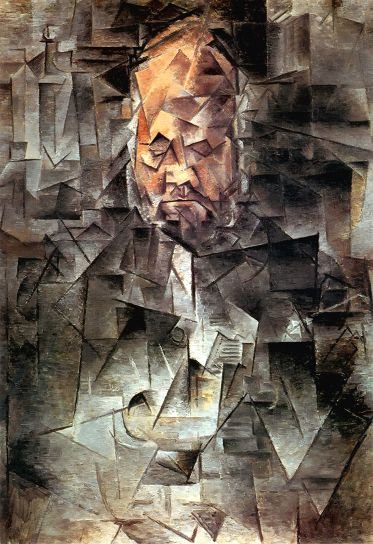

(a painting with multiscale intermediate asymptotics)

Turn off the Lights. Have a sit and Explore advanced quantitative finance. You are in good company!